
A Loss With a Soundtrack: What a $5 Slot Machine Taught Me About Money
Aug 07, 2026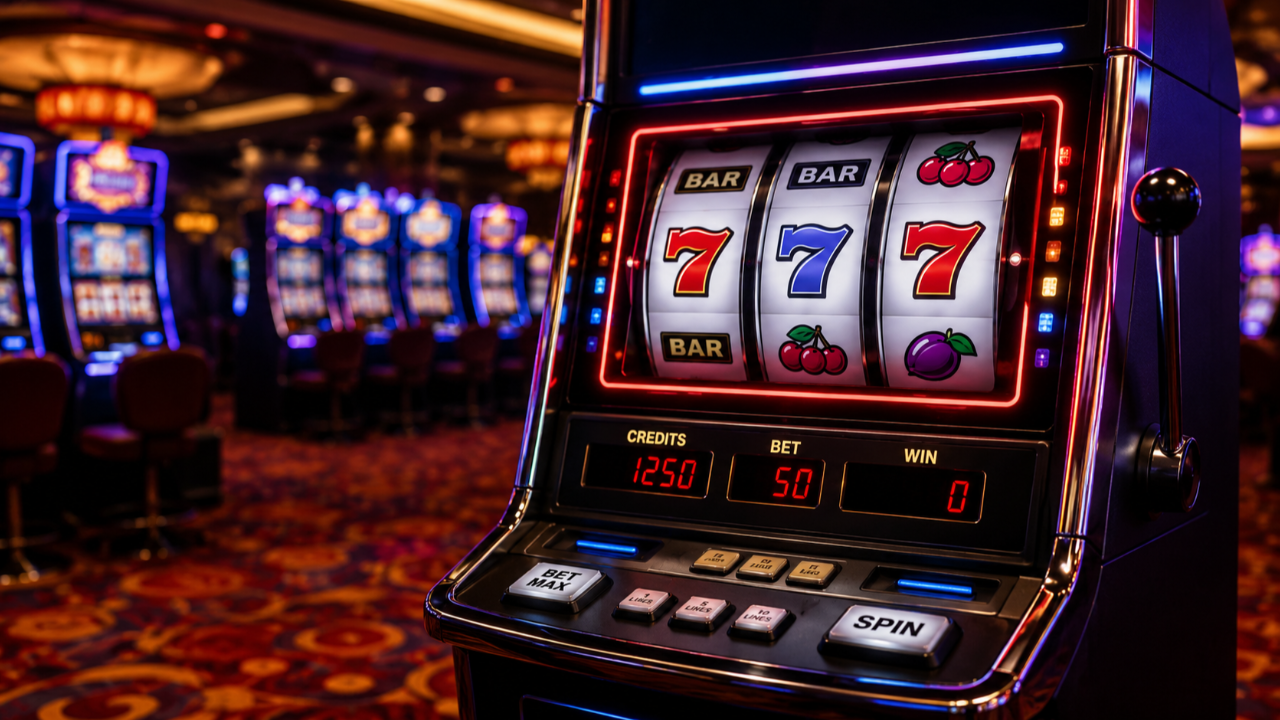
When was the last time you went to a casino?
A few weeks ago, I spent a week in Las Vegas for a conference, staying at a hotel with a massive casino on the ground level. Every day, I had to walk through it just to reach the convention center.
It was sensory overload. Cigarette smoke in the air. Bells, buzzers, and electronic jingles ringing constantly. Lights flashing from every direction. No quiet, no natural light, no sense of time. Every machine seemed to be competing with the one next to it:
Look at me. Pay attention to me. Come play me.
My mom had given me $20 to play the slots — she was feeling lucky. My intentions were good. But I couldn't figure out how to play. Denominations, credits, multipliers, bonus games, buttons everywhere. I couldn't tell what I was betting or what I needed to win.
I gave up, came home, and handed Mom her $20 back. We agreed to go to the casino near home and figure it out together — because I remembered slot machines being simpler than this.
When a Nickel Was a Nickel
When I was in the military, we occasionally went to casinos, and the machines were straightforward. Penny, nickel, quarter, dollar — you found one that fit your budget. Put your coin in, pull the lever, and either the symbols lined up or they didn't. Simple.
Fast-forward to a recent visit to Wind Creek Casino near home. Mom and I walked in determined to figure this thing out. After all, I'm a CPA. I can figure out a slot machine.
Or so I thought.
The $5 Experiment
We eventually asked a casino manager for help. Bless his heart, he did his best — walking us through 1-cent and 2-cent denominations, credits, cash, bets, and wins. I nodded. I listened. I still had questions. Not about how to play anymore — about why it needed to be so complicated.
The basic concept hadn't changed: put your money in, the symbols line up or they don't, you end up with more money than you wagered or less. Why did I need to understand denominations, credits, and multipliers just to risk five bucks?
Then we asked another employee how a different machine worked. She admitted she didn't know. Her training, she said, had included five pages of instructions on how to use the slot machines.
Five pages. To play a slot machine.
She laughed and said"the only people who really know how these machines work are the people who play them every day."
In that moment, I realized...complexity IS the point. I was approaching the machine with my CPA brain — I wanted a clean transaction. How much am I betting? What are these credits worth? What's my actual balance? Instead, the machine gave me credits, denominations, multipliers, bonus rounds, flashing lights, bells, and music.
A Loss With a Soundtrack
I pressed the button. The machine lit up. Bells rang. Music played. Numbers flashed.
For a second I thought: Oh! I won something. Show me the money!
Except I hadn't. The machine had paid something out — but I'd put in more than I received. The logical finance brain kicked in: What exactly are we celebrating here? I just lost money.
I had experienced a loss with a soundtrack. The machine wasn't lying to me — it had paid something out. But everything around that payout — the lights, the sounds, the celebration — was drawing my attention toward what I received rather than what I'd lost.
Now I curious. I wasn't trying to figure out the slot machine anymore. I was trying to figure out what it was doing to human behavior. What is this machine doing to us.? What were credits doing to our perception of actual dollars? Why did getting some money back feel worthy of celebration when the net result was still a loss?
But Aren't We Supposed to Hate Losing?
One of the best-known concepts in behavioral economics is loss aversion — the idea that losses feel more significant to us than equivalent gains. That certainly described me. I lost my $5 and I was done.
But I looked around, and people were sitting at machines putting in dollar after dollar, clearly there far longer than my brief gambling career. If we dislike losing so much, how do we keep risking money after we've already lost?
This wasn't really a story about gambling. It was a story about how human beings make financial decisions.
We're Not Nearly as Rational About Money as We Think
We like to believe our financial decisions are mostly about numbers: Can I afford it? What's the return? What's the interest rate? But we're human — susceptible to framing, emotion, reference points, reward cues, fear, greed, and loss aversion. None of that makes us foolish. It makes us human. And these influences don't stay in the casino.
Think about credit-card rewards. We get excited about 2% cash back, airline miles, or points. Look what I earned! But if we're carrying that balance at 20%, 25%, even 29% interest, that reward looks very different. We're celebrating the 2% while potentially paying many times that in interest — focusing on the reward while overlooking the cost.
Sound familiar? It's another version of a loss with a soundtrack. (To be clear: if you pay your balance in full every month, rewards are genuinely valuable. The point isn't that rewards are bad — it's that how something is presented shapes what gets our attention.)
Don't Just Look at the Reward. Calculate the Net Result.
Here is the lesson my $5 bought me. When the machine started celebrating, my CPA brain didn't care about the lights or bells. I wanted to know: what did I put in, and what did I get back? What's the net result?
That question is worth asking far beyond a casino experience — because plenty of financial choices come with their own soundtrack: Look how much you saved. Look at the points you earned. It's only this much per month. You deserve it. Just one more time. Sometimes the soundtrack is marketing. Sometimes it's the people around us. Sometimes it's just the story we're telling ourselves. The environment changes. The psychology doesn't.
What's Playing in the Background of Your Financial Decisions?
I walked into that casino determined to understand a slot machine. I walked out remembering our truth. Understanding money also requires understanding ourselves — what gets our attention, what makes us feel rewarded, what makes us afraid, what influences our decisions without us even realizing it.
I walked out of that casino telling myself..."I can't use something I don't understand." That's not a bad principle for our financial lives either. Understand what you're buying. Understand what you're investing in. Understand what you're paying, and what you're actually receiving in return.
And every once in a while, turn down the noise long enough to ask yourself: What's actually happening to my money?
Because sometimes there's a soundtrack playing in the background of our financial decisions — and we don't even realize we're listening to it.
